European Politics in Times of Crisis (B.A.)
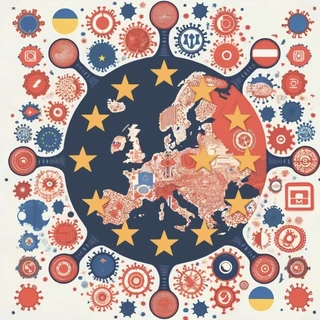 Source: ChatGPT 5 with DALL-E 3
B.A., Summer term 2024 & Winter Term 2024/25, University of Cologne
Course Description:
For decades, European politics and society have been shaped by a succession of major crises, including the financial crisis of 2008, the so-called refugee crisis of 2015, the coronavirus pandemic, and Russia’s war of aggression against Ukraine. These crises have triggered far-reaching political responses, yet their effects have varied considerably. For example, the European Union responded to the coronavirus pandemic with a €750 billion economic recovery programme—an unprecedented display of solidarity that was largely absent in the aftermath of the 2008 financial crisis, particularly from the perspective of countries such as Italy and Greece. Similarly, stark differences can be observed in the EU’s handling of refugee movements in 2015 and 2022, ranging from fragmented and uncoordinated responses to a swift and unified approach toward Ukrainian refugees.
This seminar examines the relationship between crises and political responses in the European context. The course focuses not only on the behaviour of political decision-makers, but also on public opinion and political behaviour among citizens, as well as the role of the media. In addition, it explores how crises affect the development, resilience, and legitimacy of the European Union as a political system.
At the beginning of the seminar, students engage with contemporary strategic foresight methods to develop and discuss potential future crisis scenarios, which serve as a recurring point of reference throughout the course. The seminar primarily draws on literature from political science, complemented by selected contributions from related fields such as political economy, communication studies, and psychology. Alongside theoretical and empirical readings, the course includes an introductory component on the programming language R. Students learn to replicate empirical analyses from the literature and use these tools to explore additional research questions.